
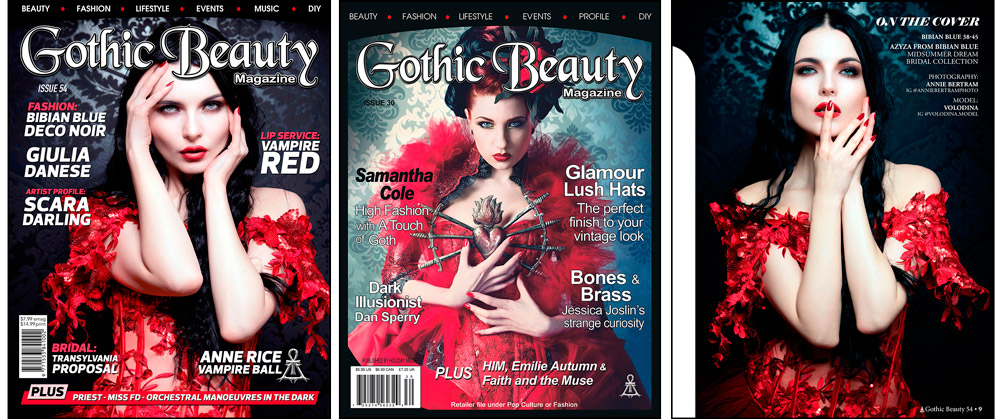
Bibian Blue‘s Bibiana Berenguer really exemplifies some of Gothic Beauty Magazine‘s core values. A pioneer of goth couture, she came out of the European gothic scene, sought out education at the Barcelona International Academy of Fashion, and created work which was truly original, blending influences both modern and old. Growing up, she was exposed to antique restoration and jewelry design at a young age. Eventually she ran a gothic clothing store but wanted clothing items to exist which did not exist yet. Bibian Blue initially launched via goth festivals like Mera Luna and Wave Gotik Treffen. Her first signature piece, a corset, is still her dream garment. For the first decade, Bibian Blue produced ready-to-wear designs, but today all her Barcelona-based atelier’s creations are made-to-measure custom apparel. Bibiana says that, as she herself has matured, she does not want to rush and enjoys her shift to slow fashion and especially made-to-order bridal outfits. Some of her most intricate couture dresses can take an entire week to complete. Her unconventional wearable art designs incorporate historical craftsmanship, structured corsets, filigree detailing, lavish materials, and unique takes combining gothic sensibilities, fantasy, and elegance.
Her work has been covered directly many times in Gothic Beauty Magazine, including Gothic Beauty Magazine 30, 33, 54, and 58, and has also appeared in numerous photographs at balls and festivals and similar. Gothic Beauty has published her collaborations with some really excellent alternative fashion photographers including Annie Bertram, Monica Chamorro, Alan Amato, Phantom Orchid, and The Wild Rose. Models who have worn her exquisite designs in Gothic Beauty Magazine’s pages include Ulorin Vex, Morrigan Hel, Volodina, DarkMoon, Danae Cuesta, Marta, The Wild Rose, Denise del Conte, and more. Her gowns graced the covers of Gothic Beauty Magazine 30 and 54.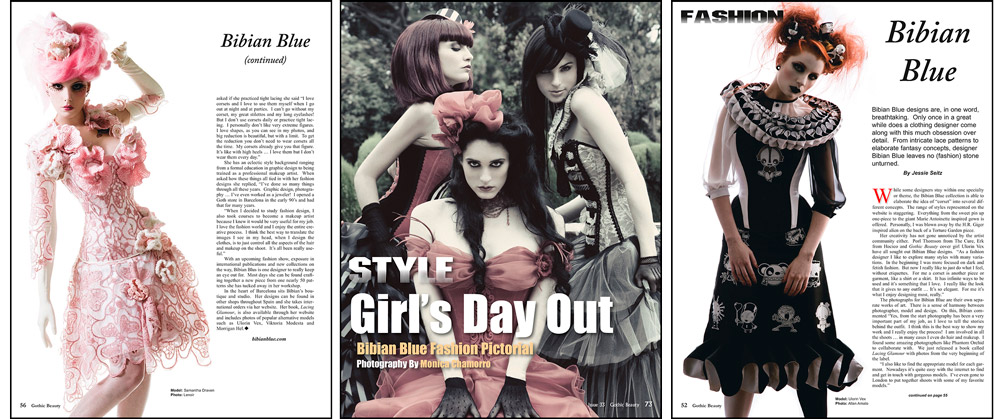
We are thinking of including Bibian Blue‘s collaboration with Ulorin Vex and Monica Chamorro in the retrospective calendar currently funding on Kickstarter. If you pledge the Gothic Beauty Kickstarter project, you can help curate which images we publish. I am very excited about getting to interview such icons of our community. Excerpts of this interview series will be included in the Gothic Beauty 25 Year Reunion of Original Artists – Calendar Project, but I wanted to share the full-length interviews as well.
BTS: How did this particular shoot for Gothic Beauty Magazine 30 come together with Ulorin Vex and Monica Chamorro and what was the shoot day like? Anything you’d like to share about the location, how the collaboration went, what it was like working with your collaborators, anything extra you had to do to make the shoot happen? What was the process like of putting this outfit together and has your styling/designing process changed/evolved since then?
Those productions marked the beginning of a much more professional phase for me. It was an exciting time working with established teams, well-known models and more ambitious editorials. I was a huge admirer of Ulorin Vex, so collaborating with her was a dream. Monica Chamorro and I travelled to London, and we spent three very intense days shooting with three of the most iconic gothic and fetish models of that moment. It was magical and truly a before-and-after in terms of the photographic quality and the visual identity of my work.
The look we shot was part of my boudoir line from that era. I was exploring antique corset-belt silhouettes, reimagined in a romantic and modern way. The latex gloves and stockings added a contemporary fetish twist, and the styling was created together with the stylist, Monica and me. I also loved the idea of incorporating henna into the look; I had seen the makeup artist use it in more tribal or Indian-inspired works, and it echoed lace beautifully and became part of the visual concept. Everything flowed very naturally.
For that shooting, this was the inspiration: I wanted to create a very powerful Red Queen — elegant, sophisticated, and commanding. That summer, while visiting a friend in Galicia, he gave me an antique metal heart with seven swords. It felt incredibly special, and I immediately knew I wanted to include it in the shoot, as Catholic religious iconography has always fascinated me.
People loved this look so much that we received many orders for the corset, so we ended up creating a resin version of the heart for sale. The headpiece was handcrafted from an old candle holder, which I draped with red velvet.
Given that your work helped define the 2000’s (and beyond!) gothic aesthetic, what are your thoughts on the ways the culture and its art/fashion/style have evolved?
It is an honour to hear that my work helped shape part of the 2000s gothic aesthetic. Over the years I have seen elements of my designs used as inspiration by other brands, and I have always taken that as a compliment. We all absorb many influences and reinterpret them in our own way. I have never minded sharing knowledge either — through my corsetry workshops or through suppliers — because creativity grows within the community, and we are all inspired by the great names of haute couture.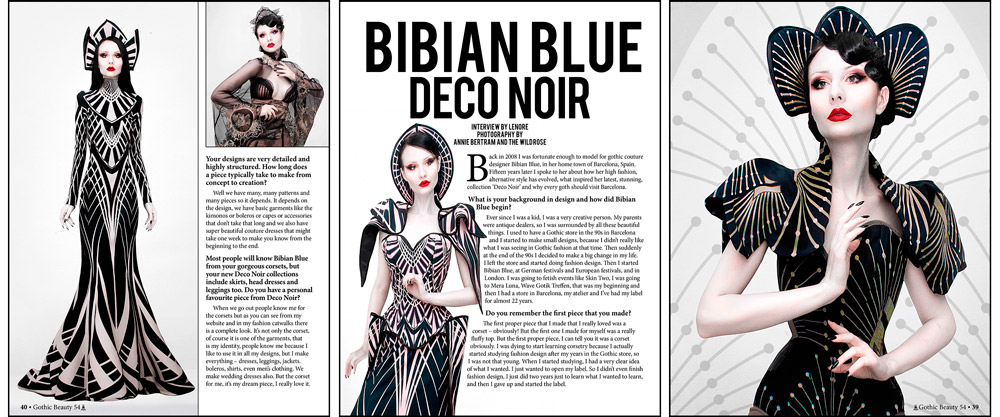
Obviously your work from this time period is iconic, but, from your perspective, where were you at in your career at the time?
It was a moment of transition for my brand. My book “Lacing Glamour” had just been published, with Ulorin on the cover and several images from our London trip almost others. Shortly afterwards, I began doing official fashion week runways and expanding into full collections beyond the strictly gothic and fetish universe where I started. It was an exciting and transformative period.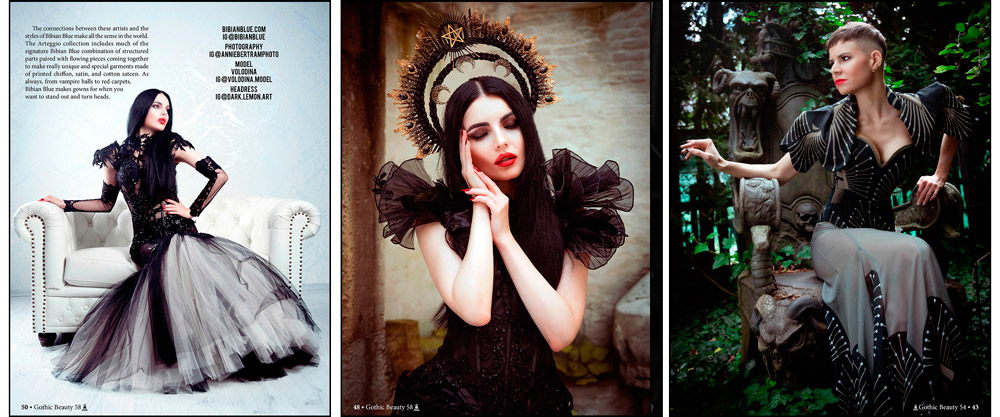
What are some of your credits (publications, people you have dressed, events you’ve done fashion shows at)?
This year marks the 25th anniversary of Bibian Blue, so the list of experiences, runways and collaborations is long, and I treasure many wonderful memories from the entire journey.
www.bibianblue.com
Instagram @bibianblue
Facebook Bibian Blue
The Gothic Beauty reunion retrospective Project is on Kickstarter until December 11.