
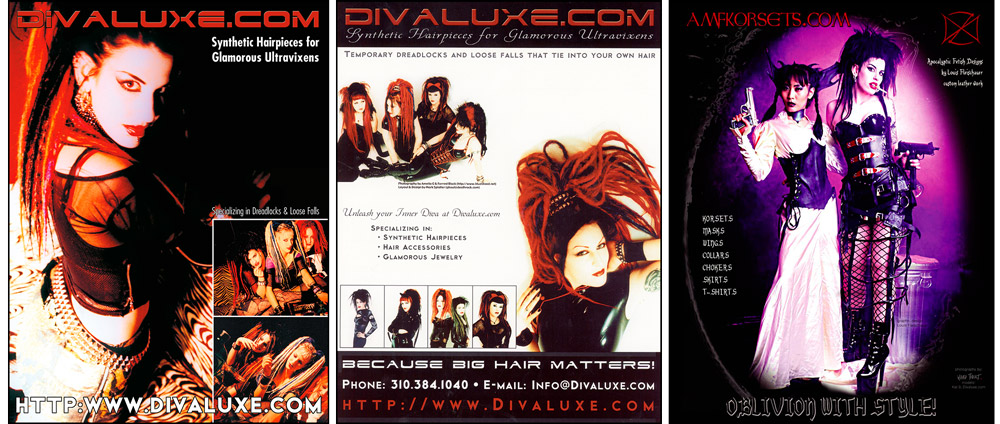
DivaLuxe‘s Diva Luxotica had an enormous influence on the style of the early 2000s. Initially inspired by a combination of Japanese Visual Kei, 80s hair metal style, and the synthetic hair trend pioneered by Camden scene queen Dollie, Diva brought a uniquely dramatic style of hair falls to America. Her work was simultaneously realistic and extravagantly styled. All of her designer pieces were exquisite handmade artisanal creations, often imagined specifically for a particular luminary to wear. DivaLuxe appeared in Gothic Beauty Magazine 4, 5, 7, 8, and 12, and her designs almost certainly adorned the tresses of various goth bands and models in other issues as well. She also modeled for other significant fashion designers including Louis Fleischaur from AMF Korsets.
Today, she also goes by Nico Star at The Bitter Glitch and curates furniture artistry, vintage clothing and other crafty items. Active in local markets, she supports shopping locally and sustainably and patronizing small businesses.
We are thinking of including one of the photos of DivaLuxe blue hair falls, modeled by Batty (also wearing Azrael’s Accomplice) photographed by Amelia G and Forrest Black, in the retrospective calendar currently funding on Kickstarter. If you pledge the Gothic Beauty Kickstarter project, you can help curate which images we publish. I am very excited about getting to interview such icons of our community. Excerpts of this interview series will be included in the Gothic Beauty 25 Year Reunion of Original Artists – Calendar Project, but I wanted to share the full-length interviews as well. Her reminiscences of the early 2000s are very powerful and moving.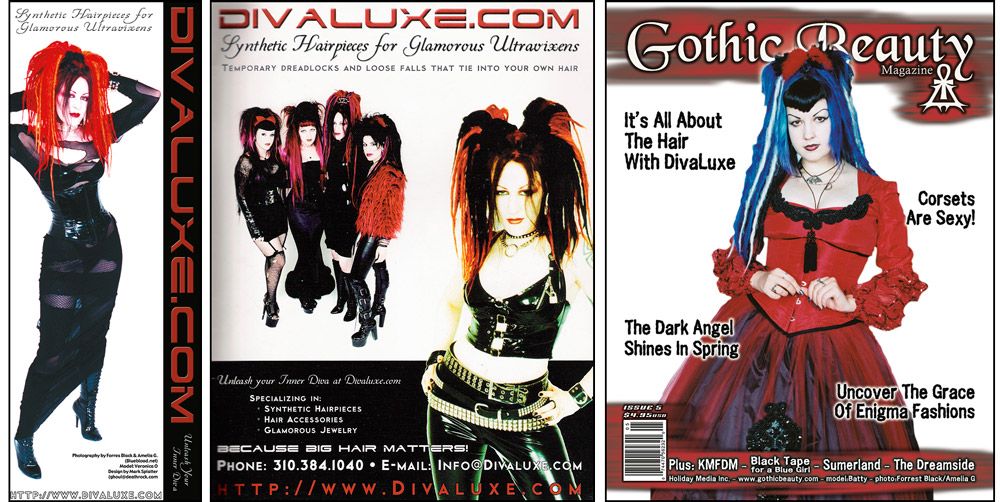
BTS: How did this particular shoot for Gothic Beauty Magazine 5 come together and what were the shoot days like? I understand the cover and the inside images were shot at different times. Anything you’d like to share about the location, how the collaboration went, what it was like working with your collaborators, anything extra you had to do to make the shoot happen? What was the process like for selecting falls styles to go with different outfits and hairstyles and models and has your styling/designing process changed/evolved since then?
Yes, the cover and the inside photos are from different shoots, but all were taken by Forrest Black and Amelia G of Blue Blood Magazine. I didn’t know the cover model, Batty, personally, but at the time we all kinda “knew” one another from the internet. She was gorgeous, and of course it thrilled me to see her in that piece.
For my own site (divaluxe.com 2001 to 2004) and all marketing materials, there was never any doubt in my mind that I wanted all photographs to be shot by Forrest and Amelia. I had friends that modeled for them, and they often showed up at the local deathrock clubs, either to shoot or just to hang out, so it wasn’t hard for me to get acquainted with them. I have a ton of respect for them. I always thought of them more as cultural anthropologists with an early understanding of the potential of emerging tech. They were documenting an important moment that was full of creativity and defined by uniqueness – from the music to the clothing and yes, the hair. They had a discerning eye. You weren’t going to see any mall goth bs in their work – they recognized the people that went above and beyond with their style, their art, their body modifications, etc.
Obviously, I can’t stress enough how important the emerging internet was in the late 90s. Goth-focused newsgroups and forums emerged. Loners made friends. Outsiders bonded. The world suddenly seemed much smaller and more accessible. Suddenly, we had reasons to leave our own comfortable nests and started to travel. Goth meetups and even multi-day conventions started to happen, physically bringing online friends together from all over the world. That’s where the whole hairpiece thing kind of came about, when I started travelling to the UK and Europe.
I grew up in Los Angeles and was not exactly a stranger to fake hair. My neighborhood was full of beauty supply shops that sold bags of synthetic braiding hair, and I had been experimenting with that kind of stuff since high school. I always hated my natural hair. It was too fine and too flat and I could never get it to do anything cool. I coveted big hair. My influences were (and still are) Patricia Morrison (Bags, the Gun Club, and the Sisters of Mercy) and the ladies from Strawberry Switchblade. The more I could tie onto my head, the better.
When I went to England 1998 and got my first look at the Slimelight and Whitby goth queens, I just about lost my mind. Not only was their hair huge, it was really long – like, down to their knees. And the colors!!! Beautiful, vibrant, and decidedly not very “goth” – they looked more like beautiful exotic birds.
At the time I was wearing professionally sewn-in dread extensions – something that cost an enormous amount of money back then, like $500. They were heavy and itchy and uncomfortable, and I hated them. I couldn’t figure out how these girls could go about life with this impractical hair. How do they shower? Does it get stuck in doors? Does it strangle them in their sleep? I legit thought it was their real hair or permanent extensions and admired their dedication to the cause. I’ve always had this weird thing about fashion and beauty: the more uncomfortable and impractical, the sexier I think it is!
Finally, my English boyfriend told me what I had failed to grasp beforehand – the London goths were wearing removable hair pieces tied into their own hair. Well, my brain essentially exploded at this revelation, and when I returned to LA right before the millennium, I hit up my local beauty supply stores and started the whole trial and error process to see if I could make my own.
It took a few months, but I finally started making some stuff that looked pretty good, and I decided to branch out into dreadlocks and shorter length pieces. I would post pictures in the alt.goth message forums (or was it LiveJournal by then?) and people seemed to like them. But locally? I was the only person wearing this kind of stuff in LA. My deathrock friends weren’t really into it – all they wanted was a teasing comb and some Aqua Net. But the deathrock scene was small, and by comparison, the more mainstream LA goth scene was massive. The whole elegant Victorian vampire fangs-and-capes thing was gaining in popularity, and they loved my hair. I started making a few pieces here and there for other people, and before I knew it, I was making enough money that I started to give serious consideration to quitting my boring job in software and doing the hair thing full time.
I set a launch date and started building the site. There wasn’t really an option to take the content photos myself – the first basic digital cameras were just being introduced and the images just didn’t hold up compared to a professional photographer.
My first 3 models were Emma, who I had met in England but she had recently relocated to LA. The other 2, Veronica and Meredith, were deathrock scene girls that I’d admired, but didn’t know very well. I couldn’t believe my luck when they all agreed to model for the shoot. It gave me some much-needed confidence. I booked a day with Forrest and Amelia, and everything started moving. I’m happy to report that now, 24 years after that first photo shoot, Emma and Veronica and I are still best friends.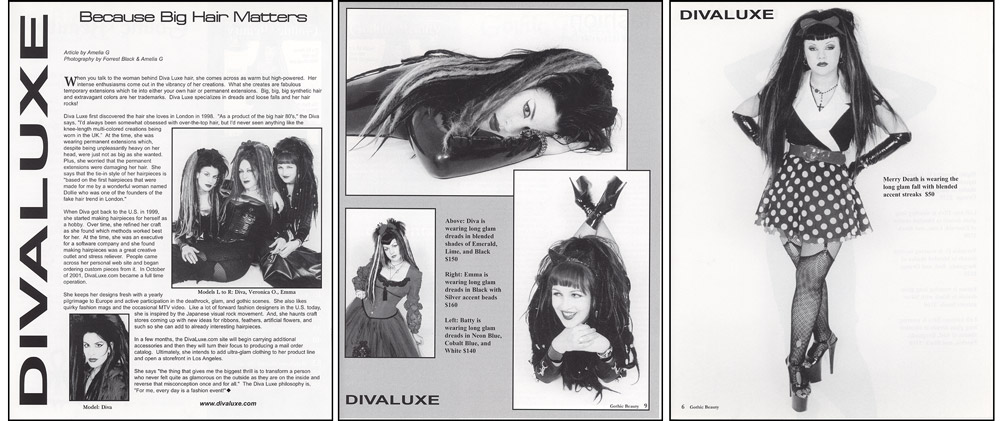
The ladies each had their own incredible style, and I wanted them to be themselves – just with a lot more hair. Emma and I were the same size, so I loaned her a few of the more over-the-top high glam pieces I’d brought back from England. Two jumbo suitcases were filled with hairpieces – long, short, layered, dreaded, color matched, blended. I just brought as much as I could. We shot it in Forrest and Amelia’s apartment right off Hollywood Boulevard. They were marvelous to work with, as were the models. It was a long day, but I was thrilled. I couldn’t wait to get the proofs back.
I launched the site just after the September 11 attacks, in 2001. Despite the economic uncertainty that developed after the attacks, it went very well right off the bat. For the next 3 years or so, I enjoyed what I now think on as My Best Life™. We all had soooo much fun. Every night was a party. It was basically my job to dress up and go to as many clubs and shows as possible. I loved it. I had tons of friends, I knew all the bands, and everything felt like an epic adventure.
What are some of your credits (publications, people you have dressed, events you’re falls have been worn in fashion shows at)?
I participated in a lot of big events, for example there used to be a big annual goth beauty pageant thing, or goth conferences like Convergence. I’d donate one of the prizes, and in return, my name would be on the flier or in the pictures or whatever. Lots of donated raffle prizes, fashion shows, and loans of pieces for photo shoots. Really, the most (and best) exposure I got was from people just wearing my stuff. I was lucky – I knew most of the popular models from back then, and would give them stuff to wear and it would show up in a photo spread somewhere.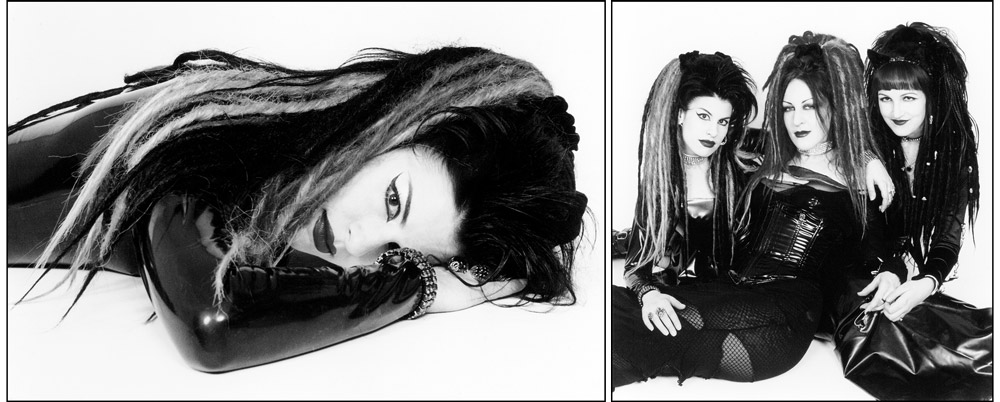
Given that your work helped define the 2000’s gothic aesthetic, what are your thoughts on the ways the culture and its art/style/fashion have evolved?
I am delighted by every single aspect of it. Never in a million years would I have thought that so-called alternative lifestyles would become mainstream. The scene is alive and thriving in Los Angeles. In the past year, since I have started selling clothes at flea markets and other alternative events, I’ve been able to see firsthand what the young people are doing, making, and wearing, and it’s impressive.
First off, it’s a golden age for female entrepreneurs and musicians. I can’t tell you how many women are out there making incredibly fierce music or fabulous wearable works of art. And since social media and content creation are, unfortunately, full time jobs these days, they basically work around the clock. I’ll tell you one thing – I am so glad that didn’t exist back then. There is so much pressure to strive for constant engagement and immediate customer service that I don’t know how they find time to create.
I’m seeing some awesome trends in LA right now. The 80s heavy metal chick look is huge, both in LA and the UK. Lots of leather and spikes, lots of skin showing, and, to my delight, big teased 80s hair. Goth is still massive. I love the confidence of young women today. They just own it. But they look out for one another, too. These designers and creators help each other by teaming up on joint events or cross marketing. It’s wonderful to see that finally, humans have realized they will get a lot further cooperating with each other than working alone.
When I meet young people at markets and whatnot, I never tell them about divaluxe.com. There’s just nothing more boring than some old person talking about how cool they used to be. What I want to know is, how did the kids themselves get so cool? They know about more obscure bands than I do. And they are omnivorous – they love it all. I never had children, so it’s endlessly fascinating for me.
Obviously your work from this time period is iconic, but, from your perspective, where were you at in your career at the time?
Even though business remained steady for those three years, eventually, my risk-averse nature started to assert itself. I had no health insurance and no savings. Getting paid wasn’t a given – business could vanish at any time. Nothing was guaranteed. Worse, I knew my tech skills were lapsing. Things started to move so quickly in the world of tech that I was afraid, if I remained self-employed, my skills would quickly become obsolete.
And perhaps the final nail in the coffin was this: I knew I could never scale the business to become any more successful than it was. I only hired 2 people during that time and swore them to secrecy on my methods. It wasn’t hard to reverse engineer my falls and make your own, but I still wanted to keep the secret sauce recipe as quiet as possible. People were starting to spring up on the internet with their own falls for sale. If I wanted to mass produce, I’d have to turn to overseas manufacturing, and even back then China was known for ripping off designers and artists, so that was out. There was clearly no future for it, so I closed the site in 2004.
I went back to the world of technology and remained there until 2024. I literally had a massive mid-life crisis when I realized it was now 30 years since I took my first job in tech in 1994. Thirty years?!? Impossible!!! Of course, I thought back to divaluxe.com and wondered if I would feel so ripped off if I’d remained self-employed in some kind of artistic endeavor. But I know myself. As a woman making her way alone in an expensive city like Los Angeles, poverty is a real concern. I opted for financial security, and in hindsight, I think that was the right decision for me to make.
Instagram @thebitterglitch and @nico.alexander.star
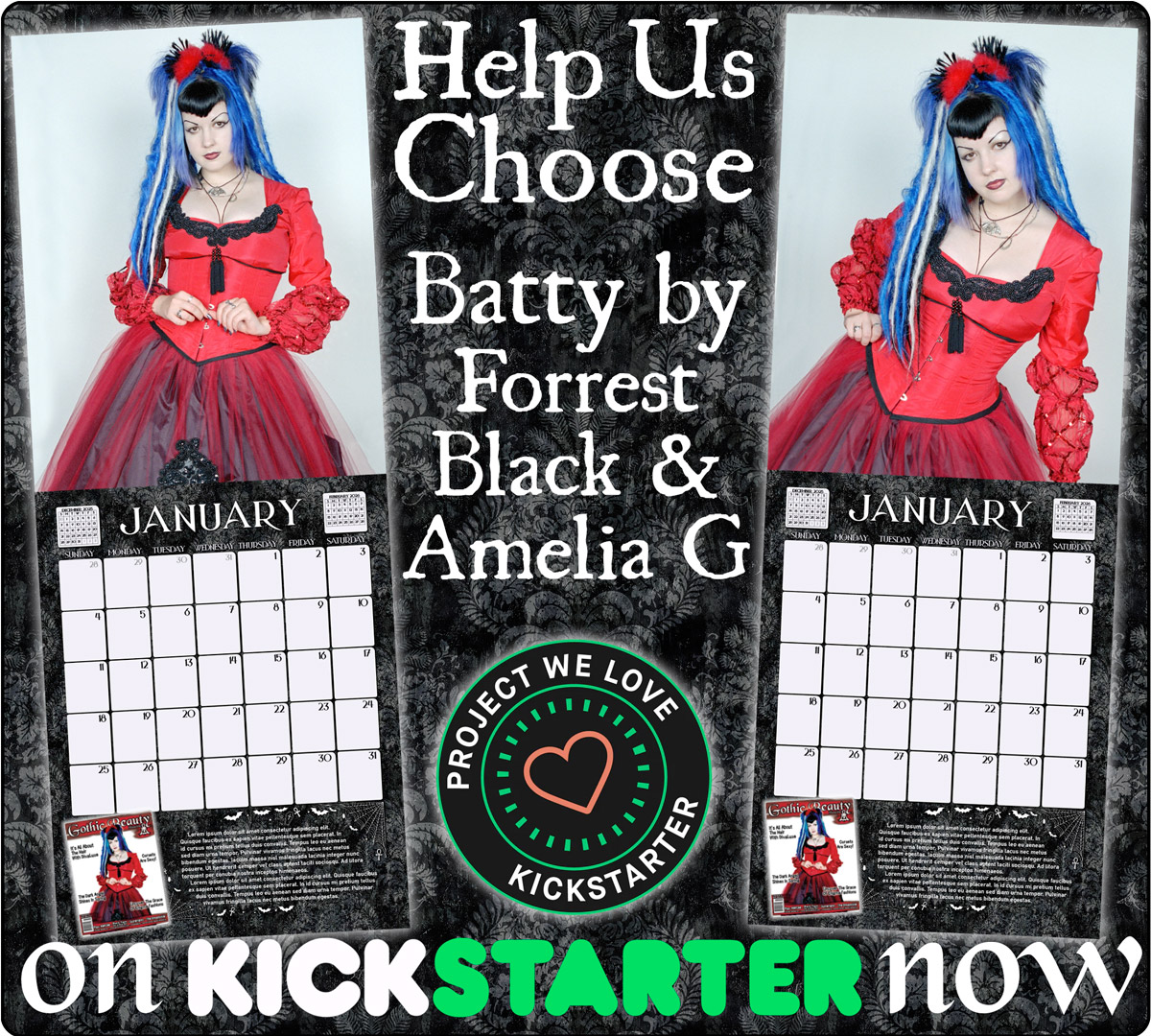
The Gothic Beauty reunion retrospective Project is on Kickstarter until December 11.